
EV Charing
From Static Discounts to Intelligent Incentives
Traditional promotions rely on static discounts that fail to adapt to real-time demand. Learn how intelligent incentive engines h

Soner Mithat Günay
March 16, 2026
Traditional promotions rely on static discounts that fail to adapt to real-time demand. Learn how intelligent incentive engines h
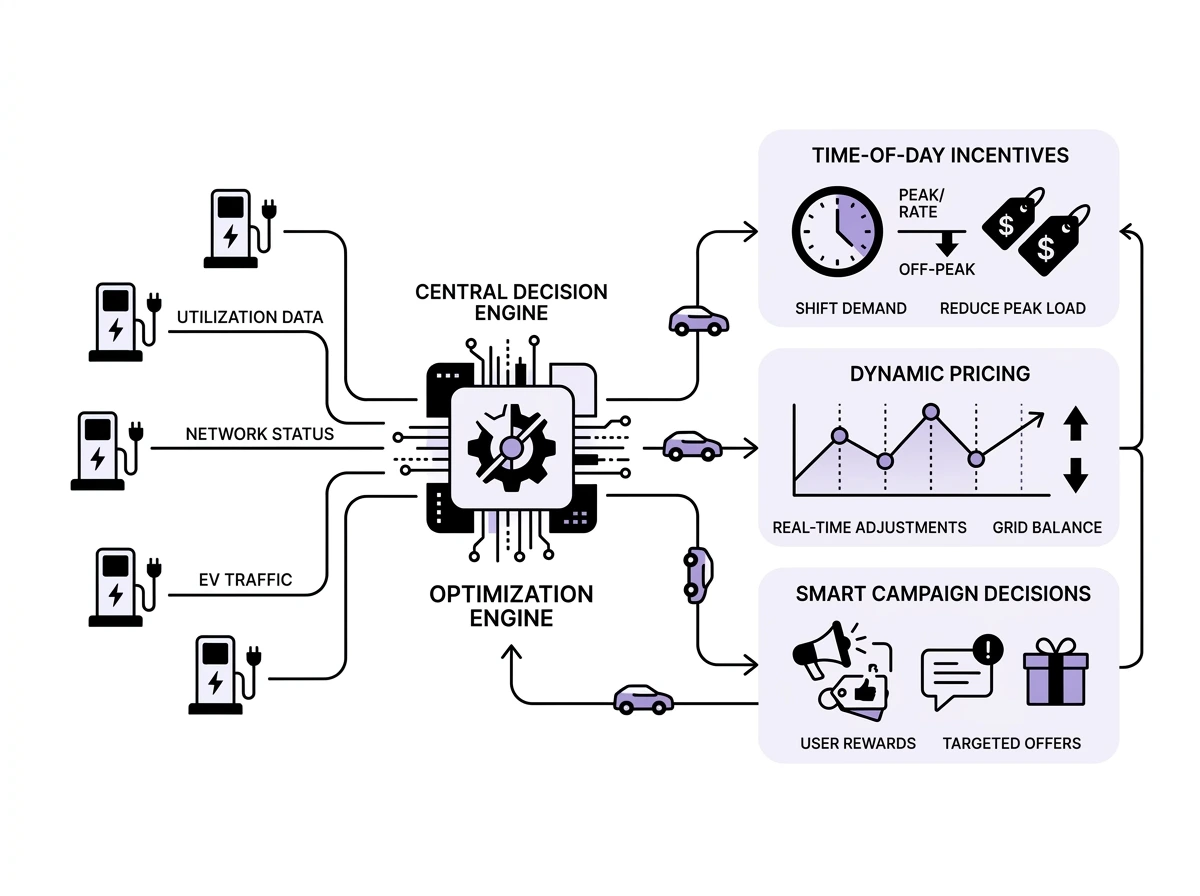
Digitalplatforms increasingly rely on promotions to attract users, increaseengagement, and optimize service utilization. However, many organizations stillmanage campaigns using static discounts and manual configurations.
While thisapproach may work for simple scenarios, it quickly becomes inefficient in dynamicservice environments such as mobility platforms, EV charging networks, andusage-based services.
As thesesystems grow more complex, the limitations of traditional campaign managementbecome more visible.
A newapproach is emerging: intelligent incentive engines.
Traditionalpromotions are typically defined with simple rules:
Thesecampaigns are usually configured manually and remain active for a predefinedtime window.
While easyto implement, this model has several limitations.
First, itdoes not account for real-time operational conditions. Demand inservices like EV charging fluctuates based on time of day, location, and userbehavior.
Second,static campaigns often lead to inefficient incentive spending. Discountsmay be applied even when they are not necessary to influence user behavior.
Third,campaign management becomes increasingly difficult as the number of campaignsgrows. Without a centralized decision engine, promotions are often scatteredacross multiple systems.
Anintelligent incentive model evaluates campaigns dynamically based on real-timecontext.
Instead ofapplying a predefined discount, the system decides whether a campaign shouldapply based on multiple factors.
These mayinclude:
Byevaluating these parameters in real time, platforms can deliver targetedincentives that influence user behavior more effectively.
EV chargingnetworks provide a clear example of why intelligent incentives matter.
Chargingdemand often peaks during specific hours or locations. Without demandmanagement, this can create congestion at charging stations while otherstations remain underutilized.
Anintelligent campaign engine can address this by offering incentives when theyare most useful.
For example:
Driversstarting a charging session during off-peak hours could receive adiscounted rate.
Similarly,charging stations with lower utilization could trigger targeted promotions toattract drivers to those locations.
In bothcases, incentives are applied only when they help balance network demand.
Anothercritical challenge in campaign management is budget control.
Traditionalcampaigns often run until their expiration date, regardless of how muchincentive budget has already been consumed.
Anintelligent incentive engine can enforce limits such as:
This ensuresthat campaigns remain financially sustainable while still achieving theirdesired impact.
As digitalservices become more complex, campaign management is evolving into somethingmore sophisticated.
Rather thansimply storing promotional rules, modern systems act as real-time decisionengines.
Theseengines evaluate incoming events — such as session start, transaction, or useraction — and determine whether a campaign should apply.
This shiftallows organizations to move from static promotions toward adaptiveincentive strategies.
Incentiveswill continue to play a critical role in digital platforms.
However, theway they are managed is changing.
Organizationsthat rely on static campaigns will struggle to adapt to increasingly dynamicservice environments.
Those thatadopt intelligent incentive engines will gain the ability to:
In otherwords, the future of promotions is not about offering more discounts.
It is aboutdelivering smarter incentives at the right moment.